Showing posts with label Ceres. Show all posts

Tuesday, 19 August 2025

Woodland Garden Lundin Links July/August 2025


The end of an era, Jan and Craig Young have finally sold their Woodlands Garden Caravan and Camping Site. This year marks the our 6th consecutive year visiting this site, which incidentally we started visiting during covid period, its main attractions, but not the only ones, are peace and quiet and adult only, which we appreciate as we always visit during the summer school holidays. The site has been sold to new owners and should be reopening for next season so we decided to put our name down for our normal pitch for next summer hoping that the site will be as well run as it has been under Jan and Craig.


This years visit was accompanied by some good weather, which as visitors to this part of

the world know makes all the difference to your stay. As this area is now very familiar we tend to cover some of the same ground as previously.


We had two walks to Blacketyside Farm Shop whose speciality is strawberrys. To get to the farm shop, we found it more enjoyable to take the long way round via the beach towards Leven and cut across the golf course to Silverburn Park and up passed the old flax mill which they are still renovating. The second visit was to celebrate our 57th wedding anniversary with a great meal rounded off with delicious strawberry sundaes. 


This year we took our new electric bikes, which for me, at least, was there first real test. Cycling locally is certainly not recommended on the main ‘A’ Roads that criss-cross this area of Fife as they are narrow, bendy and are extremely busy, but there are some  decent  B Roads that you can cycle hopefully without risking life and limb. 


Our first run was the six miles ride to the village of Ceres.


Ceres is one of a very few Scottish villages to have a village green. Known locally as the Bow Butts because of the archery practice that took place there in medieval times. 


Overlooking the Bow Butts is a monument commemorating the men of Ceres who fought in the Battle of Bannockburn in 1314 when Robert the Bruce gave an English King, Edward the Second, a sound thrashing on the battle field.


Half a mile from Woodland Gardens entrance is a X58 bus that takes you to St Andrews bus station in 25 minutes. Although the timing of the return bus can not always be relied upon.


St Andrews, always worth a visit for the book shops and to stock up on a years supply Highland Soap, is a beautiful town named after Saint Andrew the Apostle, whose relics are said to have been taken there in 732.   St Andrew has been celebrated in Scotland for over a thousand years, However, it wasn't until 1320, when Scotland's independence was declared with the signing of The Declaration of Arbroath, that he officially became Scotland's patron saint. 


The town is famously home to the University of Scotland, Scotland’s oldest university, founded by Bishop Kennedy in 1411, as well as being the seat of the Royal and Ancient Golf Club which was founded in 1754 and  attracts a great many of today’s visitors.


Along the coast line from Lower Largo runs the Fife Coastal Path would bring you to Shell Bay, although we decided to divert to the beach and walk by the sea, always a great pleasure, the sea certainly has a great attraction for me.      


The bay itself includes the very large Elie Holiday Park where we stopped for some refreshment before our return. 


The nearest 'large' town is Leven which boosts a sports/leisure/swimming pool centre. The town itself has a high street that like most towns these days has a run-down feel about it, in fact far worse than the previous times we visited. Sainsburys however has a large store not far from the local bus station. We took the number 95 bus and walked the 4.5 mile back along the beach to Lower Largo. 


Our second bike trip was the 8.5 mile ride into the historic wee town of Cuper a burgh town in northeast of the Kingdom of Fife that lies on the River Eden and 12 miles to the west of St Andrews. As it was on a Sunday we visited, the town was very quite - but Greggs was open for coffee and hot chocolate to wash down our lunch. 


On Monday the 4th August storm Floris threatened to blow us all away so we battened down the hatch and stayed indoors. But fortunately it turned out not s bad as reported. Mine you the following days continued on the same windy vain. 


Our third and longest bike trip to date was an undulating journey via quite country lanes and some beautiful country side that took us to within four miles of St Andrews to the Craigtoun Country Park. The park is an ideal spot for family outings, spacious green areas for a picnic and lots of room for ball games. There is a miniature railway and the ‘Puffin Billy’ vintage tractor rides both of which seem very popular. Forty-seven acres of the grounds were originally purchased by the Fife Council in 1947 for £25k from the Mount Melville Estate which included the Dutch Village built in 1920, and the Cypress Avenue which was designed by the Architect Paul Waterhouse (1861-1924). Part of the original ground’s houses the Scottish Golf Headquarters - The Dukes.


Lower Largo does not change and is as busy as ever with the only shop thankfully open. 


It was sad to say our fare wells to Jan and Craig , wishing them all the best in their well earned retirement. Lets hope the new owners make us as welcome as they have over the last six years.


Wednesday, 26 July 2023

Lundin Links, Kingdom of Fife July 2023.


Its a pleasure to go to Woodland Gardens for a relaxing 7 day break after taking our three grandsons away, as enjoyable as that was it can be quite tiring. 


Woodland Gardens Caravan Site is a small family campsite excellently run by Jan and Craig Young on the slopes of Largo Law in the East Neuk of Fife. It is a one-acre site with pitches set out in groups of four and five for pods, caravans, and campervans. All caravan/motorhome pitches are hard standing with electric hook up as standard plus two of the pitches are now fully serviced. This is a grand site that we were happy to have visited for the fourth time already reserving a pitch for 2024, and would not hesitate to recommend it to other campers. The site was very busy as usual but without feeling over crowded thanks to decent size pitches. 


Our first outing was a walk via the main road, that eventually takes you into Leven, to the Blacketyside Farm Shop for lunch and its speciality - strawberries, in fact it was so good that this was only the first of two visits. 


We returned to Lower Largo via Silverburn Park  and the old Flax Mill then crossing the golf course and  along the beach.


Cycling locally is certainly not recommended on the main ‘A’ Roads that criss-cross this area of Fife as they are narrow, bendy and are extremely busy, but there are some  decent  B Roads that you can cycle without risking life and limb.


Only seven miles from the camp site is the village of Ceres.


Ceres is one of a very few Scottish villages to have a village green. Known locally as the Bow Butts because of the archery practice that took place there in medieval times. 


Overlooking the Bow Butts is a monument commemorating the men of Ceres who fought in the Battle of Bannockburn in 1314 when Robert the Bruce gave an English King, Edward the Second, a sound thrashing on the battle field. 


Crossing the Ceres Burn since the 17th century is the old packhorse bridge known as the Bishops Bridge which displays a lovely span of cobbled stone surfacing.


Look closely around the village and you will come across a sculptor of a Toby Jug. This is thought to depict the Rev. Thomas Buchanan who became the last church provost of Ceres in 1578.


Other points of interested to see during your visit to this most interesting wee village is of course the parish church, built in 1806, and its Kirk Yard, and when open the Fife Folk Museum   which occupies several old houses that were renovated in 2003-4 following a fundraising campaign.


Half a mile from the campsite you can catch a bus directly into St Andrews, a beautiful town named after Saint Andrew the Apostle, whose relics are said to have been taken there in 732.   St Andrew has been celebrated in Scotland for over a thousand years, However, it wasn't until 1320, when Scotland's independence was declared with the signing of The Declaration of Arbroath, that he officially became Scotland's patron saint. 


The town itself grew around its cathedral built in 1158, which was the headquarters of the Scottish church in Medieval times. In 1559, during the Reformation, it was ransacked by supporters of John Knox and left to ruin. The site itself had been used for Christian worship since the 8th century.


The town is home to the University of Scotland is Scotland’s oldest university, founded by Bishop Kennedy in 1411, as well as being the seat of the Royal and Ancient Golf Club which was founded in 1754. Its golf that attracts many of today’s visitors but we were more interested in exploring the architectural features of this well preserved monied town. It boasts at least three excellent book shops and a great selection of places to eat. Our return was via the coastal route, a longer bus journey, but well worth it. 


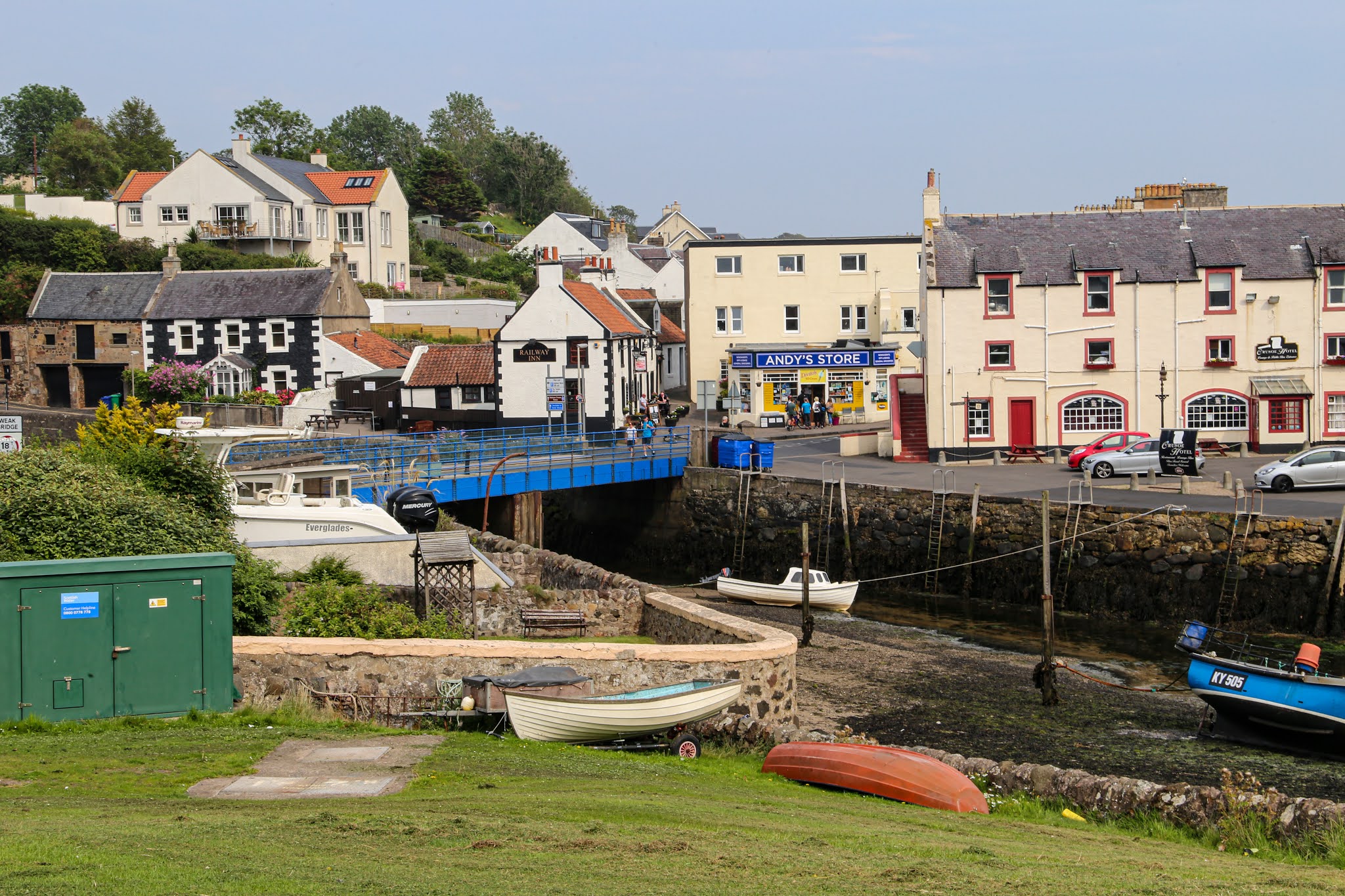
An enjoyable one-mile walk from the site brings you to the picturesque coastal village of Lower Largo, a conservation area situated on Largo Bay, which was an ancient fishing village and has historic links to the Knights Templar. Its main claim to fame however is as the birthplace of Alexander Selkirk in 1676. It was he who provided the inspiration for Daniel Defoe’s Robinson Crusoe. Outside 99-105 Main Street there is a life size statue of Selkirk dressed in self made goatskin clothes scanning the horizon for the ship that will rescue him after four years and four months as a castaway on an uninhabited island in the South Pacific 7500 miles from home. 


The Largo Arts Week was still on and we made the most of it, but also found time for some refreshments at the Aurrie Cafe before walking back up the hill to Woodlands Gardens to end another enjoyable week at this wonderful relaxing adult only campsite.


Friday, 21 August 2020

Lundin Links, Kingdom of Fife 2020


Finally, we are able to use our Motorhome to travel and stay at a caravan and camping site in Scotland that had reopened. It’s been five very long months since we returned prematurely from Arran in March and I must be honest in saying that we were a wee bit apprehensive about this, our first trip. It was decided not to go up to the Highlands because of the negative stories in the press and the way people, who do not know how to behave, were giving campers a bad name, perhaps these idiots will be able to return to Spain next year? So, it was decided that somewhere not too far from home, quiet and well organised was required.


Woodland Gardens Caravan Site is a small family run campsite on the slopes of Largo Law in the East Neuk of Fife. It is a one-acre site with pitches normally set out in groups of four and five for pods, caravans, tents and campervans. All caravan pitches are hard standing with electric hook up as standard. Because of Covid 19 restrictions, they had in place various extra measures for visitor’s safety including extra spacing for motorhomes and caravans, no tents at present, hand sanitiser stations, a red-light system for use of shower and toilet facilities block with other facilities including the reception room and laundry closed.


This is a grand site that we would be happy to visit again and would not hesitate to recommend it to other campers. Clean and well organised during this tricky period we felt very confident about staying here.


An enjoyable one-mile walk from the site brings you to Lower Largo, a conservation area situated on Largo Bay, which was an ancient fishing village and has historic links to the Knights Templar. Its main claim to fame however is as the birthplace of Alexander Selkirk in 1676. It was he who provided the inspiration for Daniel Defoe’s Robinson Crusoe. Outside 99-105 Main Street there is a life size statue of Selkirk dressed in self made goatskin clothes scanning the horizon for the ship that will rescue him after four years and four months as a castaway on an uninhabited island in the South Pacific 7500 miles from home.


Quite a busy wee spot where you can spend an entertaining afternoon indulging in ice cream from Andy’s Shop and watching adults and children flying kites, sailing boats and playing in the sea (wet suits were a must).


The cuts, in 1965, to the railway network overseen by Richard Beeching closed the railway line that went through Lower Largo but the viaduct that carried the track still dominates the village.


The nearest ‘large’ town is Leven which boosts a sports/leisure/swimming pool centre which was of cause not open due to government regulations. The town itself has a shopping high street that like most towns these days has a run-down feel about it. Sainsbury's however has a large store not far from the local bus station. From Largo there is a coastal path to Leven that follows the line of the beach on one side and a splendid looking golf club on the landward side. If you have to carry shopping back buses run from the bus station to the bottom of the Blindwells Road and then a short walk up the hill back to Woodlands Gardens.    

Cycling locally is certainly not recommended on the main ‘A’ Roads that criss-cross this area of Fife as they are narrow, bendy and very busy, but careful study of our OS map provided some attractive looking B Roads without risking life and limb.


Only seven miles from the camp site is the village of Ceres, made all the more picturesque    by the beautiful summers day we choose to cycle there.


Ceres is one of a very few Scottish villages to have a village green. Known locally as the Bow Butts because of the archery practice that took place there in medieval times.


Overlooking the Bow Butts is a monument commemorating the men of Ceres who fought in the Battle of Bannockburn in 1314 when Robert the Bruce gave an English King, Edward the Second, a sound thrashing on the battle field.


Crossing the Ceres Burn since the 17th century is the old packhorse bridge known as the Bishops Bridge which displays a lovely span of cobbled stone surfacing.


Look closely around the village and you will come across a sculptor of a Toby Jug. This is thought to depict the Rev. Thomas Buchanan who became the last church provost of Ceres in 1578.


Other points of interested to see during your visit to this most interesting wee village is of course the parish church, built in 1806, and its Kirk Yard, and when open the Fife Folk Museum   which occupies several old houses which were renovated in 2003-4 following a fundraising campaign.

Half a mile from the campsite is the main A915 which leads directly to St Andrews via a number 97 bus or an X65 but the number 95, although its final destination is again St Andrews, takes the scenic route right along the coast via many coastal towns including a very busy town of Anstruther.  Because of the large amount of visitors we decided to stay on the bus until Crail


Crail, which was confirmed as a Royal Burgh by Robert the Bruce in 1310, lies ten miles southwest of St Andrews. It has a very pleasant architectural feel especially around the harbour area. It was in the church of Crail that John Knox, on the 29th May 1559, preached a sermon against popery which so inflamed the populace that they immediately rose and in a very short time demolished the church, not only in Crail but also in surrounding areas. It was also once famous for its capons and an important seaport, exporting salt, fish, mutton and woollens to the continent. Still a fishing village where fresh grab and lobster can be purchased from the harbour side. Its main function today is as seaside resort. Attractions like the Customs House and the museum are not open at present but there is plenty to see and enjoy never the less.


Next stop was  Pittenweem, another of the many fishing villages on this coast. Its harbour was built 17th century and many of its houses have been restored by the National Trust for Scotland under its Little Houses Improvement Scheme. Pittenweem still has a thriving fish market and in normal times has an annual arts festival in August.


After some homemade ice cream, we got the 95-bus back to Largo, although the return bus time table wasn’t very accurate!  


Our second cycle trip was an undulating journey via country lanes and some beautiful country side that took us to within four miles of St Andrews at the Craigtoun Country Park. The park is an ideal spot for family outings, spacious green areas for a picnic and lots of room for ball games. There is a miniature railway and the ‘Puffin Billy’ vintage tractor rides both of which seem very popular.


Dutch Village.

Cypress Avenue.
Forty-seven acres of the grounds were originally purchased by the Fife Council in 1947 for £25k from the Mount Melville Estate which included the Dutch Village built in 1920, and the Cypress Avenue which was designed by the Architect Paul Waterhouse (1861-1924). Part of the original ground’s houses the Scottish Golf Headquarters - The Dukes.


Cross the road from the camp site and you will find a path that leads to Keil’s Den. Den is the Scots word meaning ‘narrow wooded glen’ which perfectly describes this circular sixty-minute walk around an ancient woodland and the burn that runs through it. A very peaceful walk for a Sunday morning but not for the poor man who lost his wee spaniel Rex who we did come across twice but because he had no collar could not get hold of the poor wee mutt. Hopefully all ended well.

Both the camp site, the surrounding country side and our short distance from the shore made our stay in this part of Scotland very enjoyable and would not hesitate to revisit the area again. Congratulations to Craig and Jan Young for running a good, friendly and safe site, we felt very much at home there.